Table Of Content

The ISO 6385 guidelines provide a manifesto for the principles of ergonomics that need to be considered in the design process. While the 10 principles of ergonomics below are mainly for physical products, they may hold thoughts to consider in the user experience in digital products as well. The vast majority of our users can attest to the long-term comfort and support Secretlab chairs provide. However, they often can’t explain exactly why they like our chairs, and traditional ergonomic myths remain as prevalent as ever. Hence, we’ve decided to detail our approach to ergonomics, including empirical research studies, here.
Seating
We hope this post has offered you some new ideas on how to design a home so that it feels comfortable and inviting while at the same time minimizing the risk of injury. The idea of modern ergonomics is at the heart of Secretlab’s design — one chair that supports different postures for multiple usage scenarios, so you can always adopt the most appropriate one. Proper sitting ergonomics is key, but unlike traditional ergonomic chairs, a good chair should not limit you in shifting postures. By designing office environments that fit the work to the worker (aka ergonomics), business owners and employees alike have seen substantial increases in physical health, mental health, focus, and productivity.
What is ergonomic design and Why Should You Know About It?
Certain human characteristics are used to evaluate human responses and sensitivities. Designers can go for any of these approaches while using anthropometric data that best suit the given situation. These measurements are done to optimize the fit and functions of the product during design and evaluation. You don’t need us to tell you that if you plan on keeping a TV in your bedroom, it should be facing the bed. Having said that, there are other ergonomic principles to keep in mind. Ergonomically designed bedrooms pay special attention to storage solutions as a way to cut down the clutter.
BMW Motorrad presents the new S 1000 XR. - BMW Press
BMW Motorrad presents the new S 1000 XR..
Posted: Thu, 26 Oct 2023 07:00:00 GMT [source]
Ergonomics principles in the design of work systems
If you don’t want to invest in a new office chair at this time, a lumbar-support pillow and a seat cushion can transform even the most basic, non-padded chair into something you can sit on comfortably for a few hours. Those who use this International Standard can find a general knowledge of ergonomics (human factors), engineering, design, quality and project management helpful. The Institute of Occupational Medicine (IOM) was founded by the coal industry in 1969. From the outset the IOM employed an ergonomics staff to apply ergonomics principles to the design of mining machinery and environments. To this day, the IOM continues ergonomics activities, especially in the fields of musculoskeletal disorders; heat stress and the ergonomics of personal protective equipment (PPE).
Here's a fun exercise that demonstrates the importance of posture. Pinch a pencil with two fingers while keeping your wrist straight. Notice that it takes more effort to maintain the same pinch grip force when your wrist is bent.
If you spend a lot of time on the phone, or if you often type or write while you're using the phone, put the phone on speaker or use a headset. Complete your design journey and get unwavering support from ourdedicated care team. Setting up a dedicated study area for your kids can help them become more productive and successful.
Space Division
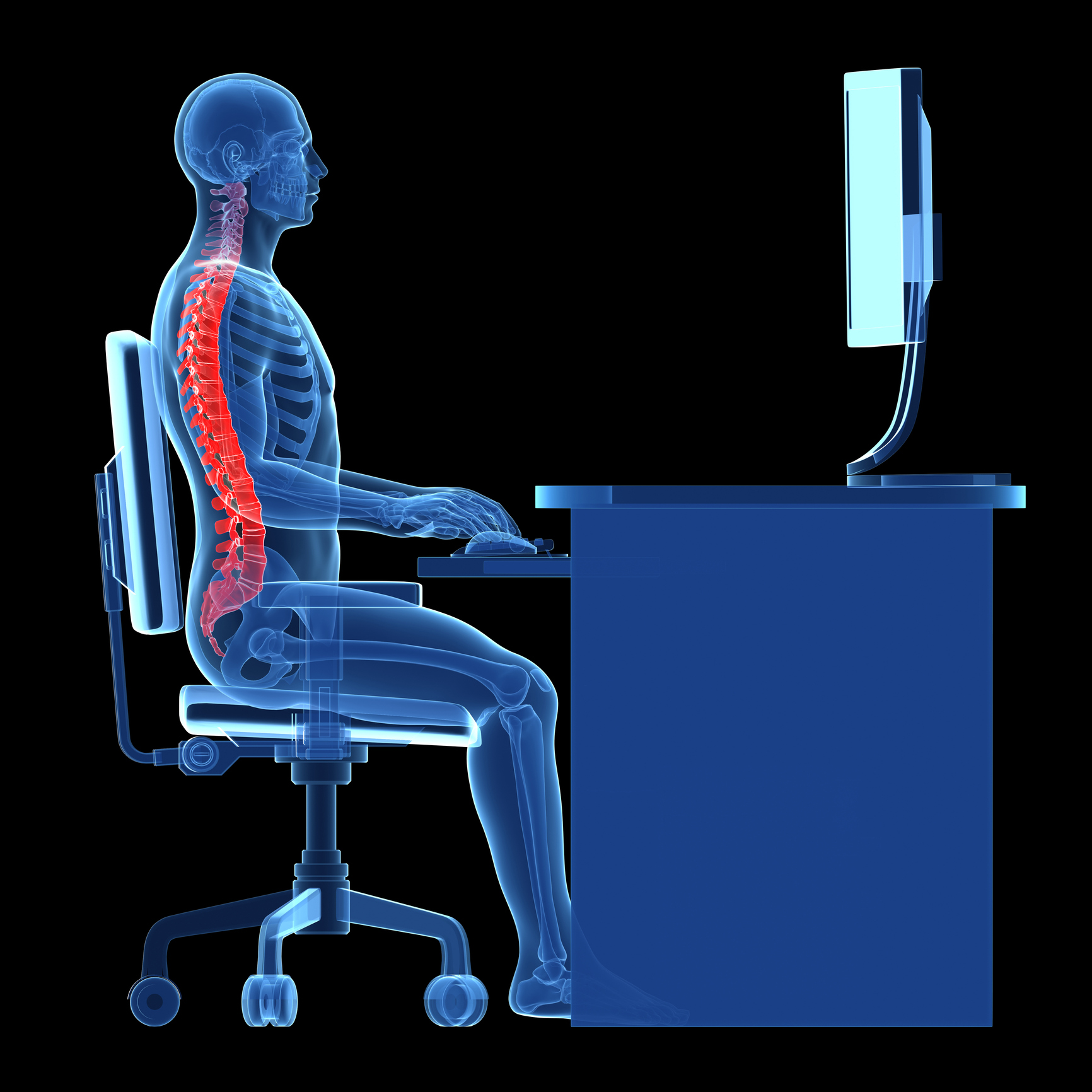
This is an essential feature and must not be overlooked while looking for an ergonomic design. Good chairs support the natural S shape of the spine to reduce slumping and stress from the lower back and pelvis. An adjustable backrest allows the users to align the curve in the chair to their spine and enjoy optimal support while working. Ergonomics in product design is defined as the science of fitting a workplace to the user’s requirements to increase productivity and reduce discomfort. Simply put, it is a study of the way people interact with spaces and systems.
Here’s how to set up a workspace that fits and supports you the best, based on advice from ergonomics experts as well as on what we’ve found over years of testing home-office furniture and gear. Another activity workers may incorporate to improve ergonomics is to make adjustments. Workers can make adjustments to their posture, bending, lifting, techniques. Workers can also modify their tools, or how they use their tools and equipment. LOSH can teach you and your coworkers how to incorporate strategies to feel good and not put your body under undue stress while working. Mini-breaks, generally less than one minute, are several short breaks interspersed throughout the day.
Studies on benefits of natural lighting
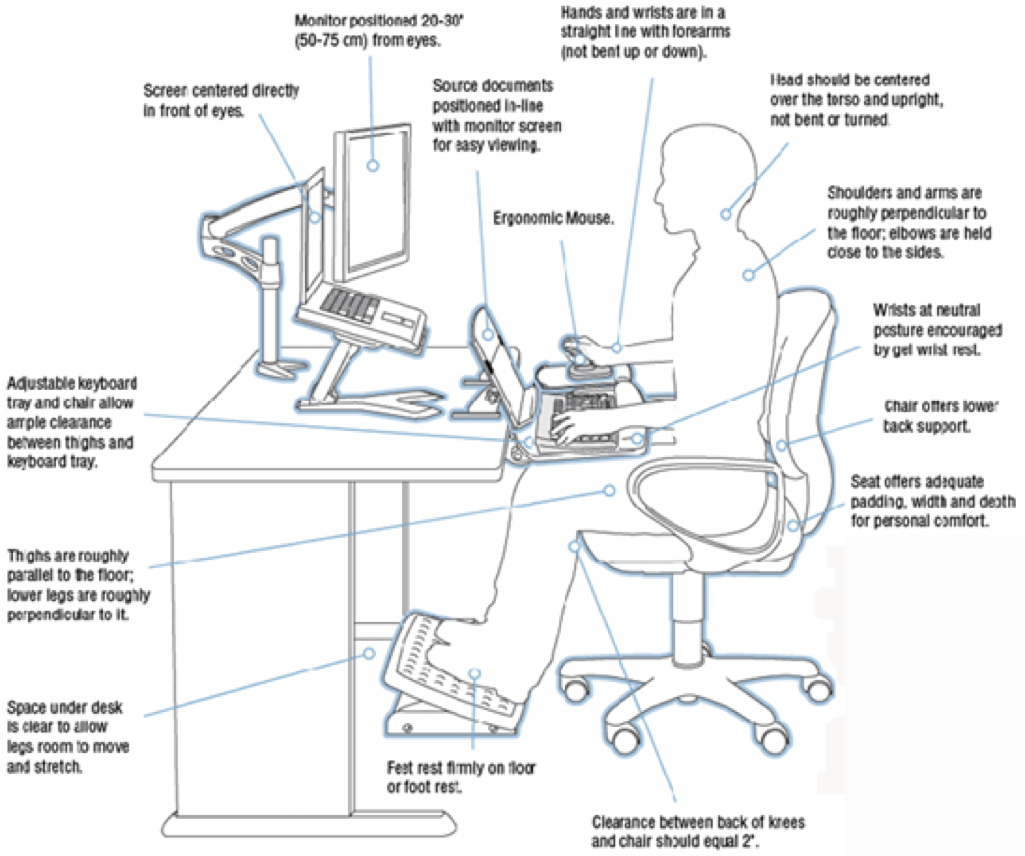
Put your computer keyboard in front of you so your wrists and forearms are in line and your shoulders are relaxed. If you use a mouse or another type of pointer connected to a computer, place it within easy reach, on the same surface as your keyboard. While you are typing, using a computer touchpad, or using a mouse or pointer, keep your wrists straight, your upper arms close to your body, and your hands at or slightly below the level of your elbows.
The key is to switch between sitting and standing throughout the day. Musculoskeletal movement, and frequent transitions from sitting to standing, help counteract the health repercussions of the modern workday routine. Any office furniture that is uncomfortable and causes pain for the employee can be a component that is not ergonomic. So it is important to invest in furniture that is ergonomically designed to ensure the safety and health of your employees. An ergonomic workplace is a workspace designed to keep workers’ capabilities and limitations in mind.
Each can be used to determine how people interact with their environments. Consider getting furniture that offers lumbar support, cushioning and comfort. Leave plenty of room between furniture so you can get around easily without bumping into anything. Area rugs and lights can also add comfort and reduce physical strain. However, most couches and chairs don’t offer proper lumbar support.
In addition, the amount of time we spend at our desks has risen tremendously. Our engineers also further optimized the support and flex profiles by manipulating the geometry of the supporting plate. An innovative Y-shaped lattice of living hinges intelligently adapts to your back as you move, always providing just the right degree of support as you move between postures.
It should be 4” shorter in length than full-length arms for the ideal arm length. The major advantage of adding desk-length arms is to be closer to the desk or table without bumping into it. Choose interiors designed with superior quality material, leavingno room for defects. Natural light should not be obstructed, and other forms of light should not strain the eyes.
In design, ergonomics is used to create safe, efficient and comfortable places for people based on how they interact with their surroundings. This can include customizing furniture, lighting and cabinets to suit individual needs. With our experience and data from making over 1,000,000 chairs a year, plus our proprietary and patented designs and technologies, we are now confident that we’re several years (and millions of chairs) ahead of the competition. We have no intention of ever giving up our lead and will continue to invest to make sure we are at the forefront of sitting ergonomics.
“For better ergonomic health, your body should be moving frequently, even when seated. Variability of posture is more important than maintaining 'perfect posture'. Each design is then refined through extensive user testing, including pressure mapping, to ensure it holds up in the real world. Our designers and engineers spend years testing and iterating to ensure that every chair represents the ultimate in technical refinement and ergonomic performance. Our Ergonomics Advisory Board of independent experts works with our engineers on detailed ergonomic studies and product development reviews.


No comments:
Post a Comment